

Oh, The Reboot Project is starting to get interesting. This was the first chapter I’ve tackled where I had to do some serious thinking about how I wanted to structure the events described here. It doesn’t deviate all that much from the book itself— I cleaned up a few things, eliminated a few info dumps where I could, and added some context as well, but we’ll see how it does in the next chapter. I’m starting to realize there are whole characters I probably need to introduce sooner rather than later, and, curiously, I think Jordan’s story might wind up being far different from what I imagined it originally. So, I’m very happy to present, Opening.
~~~
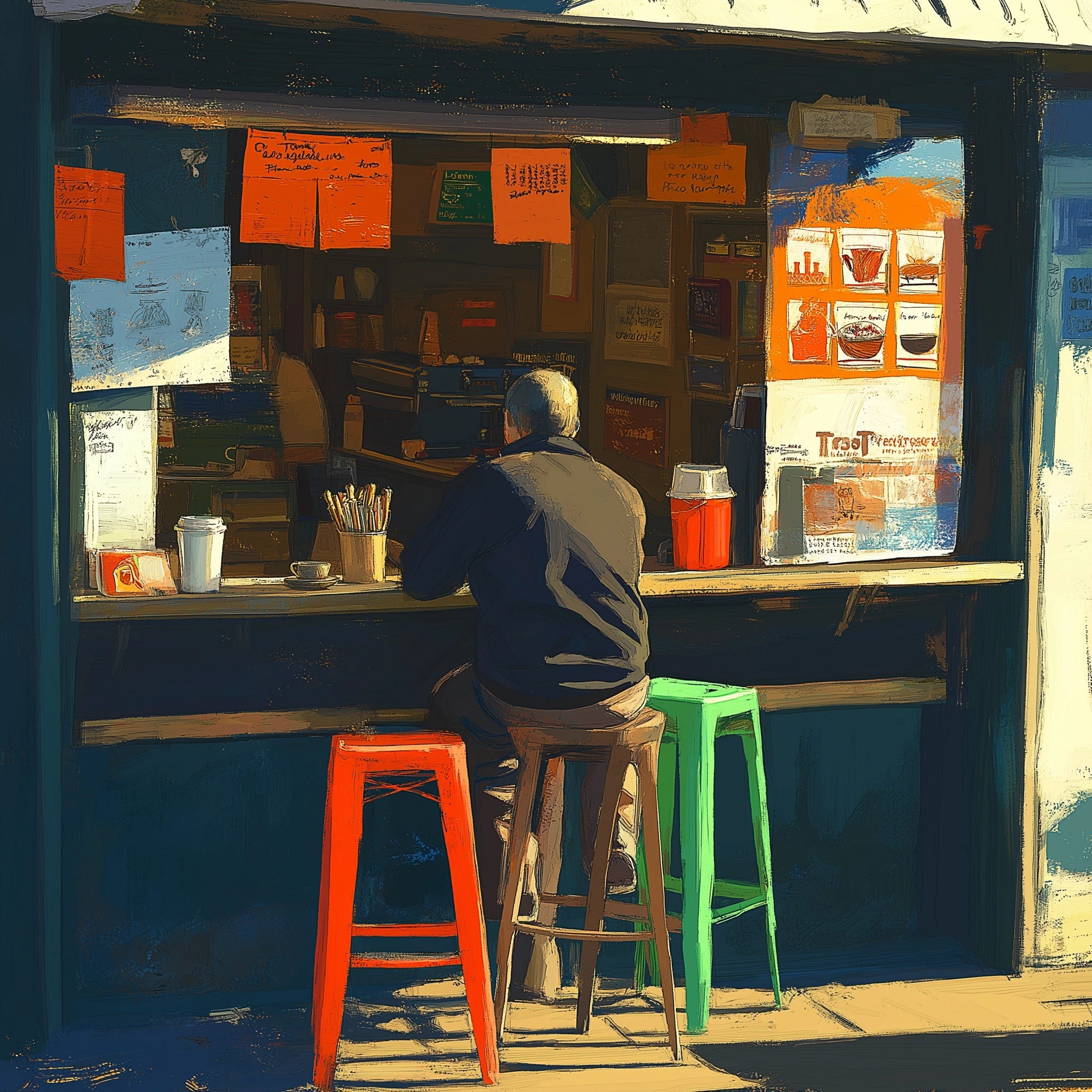
North Mankato’s Hiniker Market was bulging with activity. Jordan alternated between curiosity at the sheer volume of food and vendor options and irritation at the crowds that didn’t seem to appreciate that he was on schedule. Getting to North Mankato had been a chore. Most of Highway 169 was on the wrong side of the frontier, and the state was still in the early stages of coming up with a sensible workaround, so he had been forced to meander down through Waconia, Gaylord, and a dozen other forgettable towns to get here.
The place was booming, though. He dimly remembered coming to a house party in North Mankato when it was the sleepier, smaller counterpart to the more boisterous, larger, and directionless Mankato across the river.
Now, both seemed locked into a race skyward, with one minor difference. North Mankato’s growth was mainly concentrated along the bluffs overlooking the Minnesota River. The old downtown core remained largely the same, except for the Market.
The landscape of Southern Minnesota had been altered by the Nicolett Revolt a decade prior. Bridges that crossed Interstate 35 were severed. Barbed wire and frontier posts were going down the median. In Mankato, the Belgrade Avenue bridge was the only bridge to survive the Revolt intact. With refugees caught on the wrong side of the ceasefire lines, stuck in the city, and authorities scrambling to repair the damage and put them all somewhere, the weekly farmer’s market needed a new place to go, and the bridge was right there after all.
What had been planned as a temporary arrangement quickly became permanent, and then walls and a roof and a food hall were added, and they probably would have kept right on going had the local garrison not insisted on a ‘no man’s land’ around the midpoint of the bridge.
Jordan Montross was getting impatient. It was the morning of the weekly farmer’s market, so he had been forced to find a perch at one of the coffee vendors, tucked away in a corner stall near the south entrance. The place was tiny, little more than three feet of counter space, complete with brightly colored rickety stools. It didn’t look like much, but the iced coffee Jordan had to admit was a pleasant surprise.
On the counter in front of him, one of his phones began to buzz, and he swiped right to answer the call.
“Mr. Brown.”
“Miss Scarlet,” he replied, using her required codename as they always did. “I trust you got my message.”
“Yes, I was surprised to learn you were still alive, to be honest.”
“I’ve been out of the country for quite some time.”
“So I hear.”
“You have what I need, though?”
“Yes, the usual package will be waiting for you at the front desk of the Hotel Nicolett. Roof access via an identicard will get you to the top of the Farm Bureau Tower.”
“Good. I take it my payment was adequate?”
“My rates have changed since our last transaction,” she replied, drily. “So I gave you a discount. This time.”
“I appreciate that,” Jordan rolled his eyes and tried to keep the sarcasm out of his voice. Miss Scarlet was the best in the business, a broker for people in his line of work, but occasionally she could be… prickly. “What about the other matter?”
“Ah, yes,” she replied. “That was a bit more curious. You said he sent the signal last night?”
“Yes, late last night.” It turned out that the information Needles had given Jordan had been correct. Andrew Collins, divorced, two kids, up to his eyeballs in gambling debts he could no longer afford, was looking for a way out and was willing to pay any price for it. “We’re supposed to be meeting to confirm the final details.”
“He crossed the border yesterday evening-”
“How did he manage that?”
“There’s a ferry that will take you over and dump you in Sibley Park on the Territorial side,” Miss Scarlett replied. “For the right price, of course.”
“Naturally,” Jordan said. “So what did he do?”
“Didn’t seem to be anything much. Went to a bar, had some food, I thought he was going to head back after that, but he stopped at a bookstore instead.”
Ah, Jordan sighed. Oh, Mike. So predictable. “Did he buy anything?”
“Let me see,” Miss Scarlett mused. “Hang on, I’ve got to find the right frame here… ah ha… looks like The Count of Monte Cristo.”
“Thank you,” Jordan replied. “That tells me everything I need to know.”
“Do I want to know what you’re doing in North Mankato?”
“Probably not,” Jordan replied. “Send me your adjusted rates and I’ll be in touch. I have a feeling I’m going to have plenty of business for you.”
“Sounds good. Until then.”
“Until then,” Jordan ended the call. So, Mike was hedging his bets. Jordan couldn’t fault the man. He would probably be doing the same thing if he were in Mike’s position, but that left Jordan with a clear, if somewhat unfortunate choice.
“Sorry, I’m late.” Mike slipped onto the stool next to Jordan. He had a day-old growth of blonde stubble sprouting on his face, and his ice-blue eyes were etched with exhaustion. “Can I get a coffee?” He asked the stall owner.
“Just coffee?”
“Black coffee,” Mike confirmed. The stall owner nodded in acknowledgement and moved down the stall to the coffee machine.
“You’re late.”
“It took longer than I thought, all right,” Mike said. “He wanted to nickel and dime me over the final numbers a bit.”
“But you got it done?”
“Transferred the money yesterday per your instructions,” Mike replied. “He confirmed it went through this morning.”
“How do I know he’s going to hold up his end of the bargain?” Jordan asked. “Someone willing to do this for money isn’t exactly reliable, given what it will cost him.”
“True,” Mike replied. “But he was in DC when the bomb went off, and you know what that means.”
Jordan went cold, and his face went very still. “Cancer?”
“Yep,” Mike shrugged. “Finally caught up with him.”
The stall owner returned and handed Mike a cup of steaming hot coffee. Jordan watched as Mike fumbled for his wallet and dug out the bills to pass to the stall owner, the word echoing in his ears. Cancer. That could be you, a little voice whispered in the back of his head. That could be you. Go out in a blaze of glory. Do some good for once. Rid the world of evildoers. Pick them apart one by one until someone gets a lucky shot off or the cancer gets you first.
Mike popped the lid off the coffee and added two creams and one sugar, and began to stir. A memory flashed across Jordan’s mind, Jenna shaking her head at him. That’s your problem, big brother. You like being alone too much. This Andrew Collins, whoever he was, was at least willing to do the unthinkable with the hope of benefiting someone. Who did Jordan have? He was alone. Just the cancer and whatever Needles had planned.
Mike gave his coffee one last stir before putting the lid back on and taking a sip. “When do you hold up your end of the bargain?”
Jordan blinked. “What?”
“Your end of the bargain?” Mike asked.
“Oh, yes,” Jordan reached into his pocket and pulled out a flash drive. “This has all the details. She’s being held in the Wind River Internment Facility.”
“The release order is valid?”
“You know it is,” Jordan replied. Or if you suspect otherwise, we’ll find out soon enough. “When is he going to do it?”
Mike shrugged. “Anytime. He got the last payment and confirmed receipt of the rest upon completion of the job.”
“Good,” Jordan replied. He slipped off the stool and stood. “I’ll send the rest of your payment upon confirmation that the job’s done.”
“I’d say it’s been a pleasure,” Mike said. “But honestly, it hasn’t.”
Jordan snorted in amusement as he slipped his phone back into his pocket. “At least you’re honest.” With one final nod, he slipped past Mike and out of the stall quickly, weaving his way through the crowds, moving deeper into the market. He doubled back a couple of times to make sure Mike wasn’t following him before heading towards the exit. Jordan pulled the second phone (the one he had taken from Needles’ goons back in Winona) out of his pocket and dialled the number. It rang twice and then:
“Hello.”
“It’s happening. Probably today. Are you ready?”
“We will be.”
“Good.”
~~~
“What’s troubling you, John Casey?”
“Hmmm?” General John Casey, head of the Federal Council, glanced up from the folded-up newspaper where he had been working on the morning crossword.
“You heard me,” his wife, Doreen, fixed him with a stern look as she slipped into the chair opposite him at their kitchen table, hands wrapped around her coffee mug. “You’ve been brooding and absentminded for a good week now.”
“I… uh…”
Doreen rolled her eyes. “How long have we been married, John Casey?”
“Forty-seven years, I do believe,” he smiled.
“Exactly,” Doreen said. “You think I can’t tell when you’ve got something weighing on you?” She took a sip of coffee. “Now, I know, I know, there are always things you can’t tell me. But whatever it is, it’s been weighing on you more than usual.”
Casey leaned back in his chair for a moment. “I started something a few months back. Quietly. Very, very quietly. I was hoping it would…” he grimaced. “I don’t know what I was hoping it would do, but we came very close to getting somewhere, and then we got stuck.”
“So you gave up?”
He grimaced again. “Not exactly. The door is still open a crack, we just gotta figure out how to find a way to push it all the way open.”
“You will.”
“I hope so.”
Doreen leaned forward and placed her hand over his. “You will. Hasn’t been a door yet you haven’t been able to push through when you wanted to, John Casey.”
“Hope you’re right, love.” He sighed and pushed back from the table. “But this job waits for nobody, I’m afraid. I’ve got to be about it.”
“Meetings all day?”
“My life is made up of meetings and the slow trundle of the sausage-making machine that is the Council’s bureaucracy,” he replied as he stood. “I should be home for dinner tonight, at least.”
“You better be. I’m thinking something nice and easy. Alfredo, maybe?”
“Chicken or shrimp?”
“Chicken, of course.”
“Perfect,” Casey leaned down, and they exchanged their customary goodbye kiss. “Now I really won’t be late.”
She chuckled, knowingly. “I’ll keep a plate warm for you.”
He straightened, smoothed out his uniform jacket, and then turned and walked to the side table at the entrance of their kitchen, where he set his briefcase every night. As he picked it up, he turned back to her. “Look, in my desk drawer, there’s a letter.”
“I know.”
“Not that letter,” he replied. “It’s… another letter. It should be in the same drawer. If anything happens to me, you get that letter to McMillan. Do you understand? No one else.”
Doreen frowned. “Why are you telling me this?”
Casey sighed. “I don’t know. That thing… I started. We tried to be discreet about it, but these things have a habit of being found out whether we want them to or not, and if the wrong people found out…” He paused as he saw her expression. “Look, I don’t want to worry or anything-”
“John Casey,” Doreen pushed back from the table and walked over to him, reaching out and taking him by the hand. “You’ve been a soldier since the day I married you. You think I don’t worry about you not coming home? You think I haven’t thought about this?”
“I just don’t want to put this burden on you-”
“I accepted it the day we put these rings on and said ‘I do’,” Doreen said. “It hasn’t always been the easiest burden to bear.”
“I love you,” Casey replied. He leaned down, and they exchanged another kiss. This one was longer and considerably less perfunctory. “You’re going to make me late for work.”
“You’re the Head of the Federal Council,” she murmured. “Make them wait.” She snaked an arm around his neck and kissed him again, fiercely this time, and for a moment, General John H. Casey, United States Army, was sorely tempted to call in sick to work, but duty- and the dismaying thought of the number of communiques and emails that would be waiting for him he did that made him shudder.
Doreen stepped back from him with a knowing look in her eye. “Duty calls?”
“As always,” Casey replied with a grin. Then the smile faded from his face. “I meant what I said, though. If anything happens to me…”
“The other letter, to McMillan. No one else,” Doreen replied.
“Perfect. I’ll see you tonight.” Casey picked up his briefcase and put his cap on his head and slipped out of the kitchen, and made his way to the front of their brownstone. He paused for a moment to glance in the mirror in the front entry, making sure his cap was straight and his jacket in order before opening his front door.
He blinked in surprise as he stepped out onto the front stoop, pulling the door shut behind him. There were no clouds in the sky. The sun was shining. It felt like it was going to be a beautiful day. He made his way down the steps and stopped for a moment at one of Doreen’s flower pots. He knelt down and gently touched the pale lavender flower.
“Hello there,” Casey said. “You’re new… and I don’t recognize you. I’ll have to find out tonight.” With a slight effort, he stood up again, pleased that his joints hadn’t popped or cracked for once on the way up, and turned to his waiting car.
He heard the gunshot before he felt it, the old instincts kicking in as he fumbled for a sidearm that was no longer there and hadn’t been there for years. Fire in his shoulder. He’d been shot. He hadn’t been shot since… Ishfahan. The road outside Isfahan, that sniper got me and-
Another shot.
He staggered back. Fire exploding in his belly, his eyes searching and widening in shock. Andrew? It was Andrew, the last veteran of the old Secret Service. The only one of his bodyguards to take down a would-be Presidential assassin, tackling Franklin Robert Cincher before he could get another shot off at then-President Mitchell.
Andrew, his face blank, his hands steady, kept firing.
Time accelerated again, and General John Casey, United States Army, Head of the Federal Council, staggered backwards as more bullets tore into him and his vision began to blur to grey and then black, and the final sensation he had was falling.
~~~
Allison entered the half-empty Federal Council Chamber with a sigh of relief. She was early today. Whether it was a lifetime spent in the military or just a personality trait she had picked up somewhere over the years, she hated being late and held to the old theory that “if you’re not ten minutes early, you’re late.”
It wasn’t as if she enjoyed being at work. Making her way to her seat, she set her briefcase down beside her chair, gave her usual, only-just-regulation mass of spiky hair a quick pat to make sure nothing was out of place before pulling the high-backed, comfortable chair before sitting down. She lifted the coffee to her nose and inhaled, smiling in pleasure. Caramel latte, three shots of espresso, and just the faintest hint of cinnamon dancing on the edge of the tongue. Perfect. Indira, as usual, never missed. Coffee initiated, she placed it to one side and pulled her briefcase up onto the table, flipped it open, and pulled out the agenda for today’s meeting.
She grimaced as she glanced through it. Money. It was always fights about money. Under the terms of the Treaty of Philadelphia, the states had been granted broad powers to manage their affairs, but the Federal Council still held the purse strings. States always needed something. Money for bridges, education, and infrastructure, the requests never seemed to stop coming. But that was the basic bargain that ran America these days: states stayed out of Federal politics and the Council kept the money flowing.
The States held considerably more power than they wanted to exercise, as the day-to-day governing of the country was handled by what people had come to call the Rump Council. This consisted of a strange mixture of the Generals of the Army and the Air Force, the heads of the Cabinet Agencies that survived the destruction of Washington D.C., and the heads of the ATF, FBI, CIA, and the Department of Homeland Security.
The Rump Council wasn’t the full Council as enumerated in the treaty, though. That included seven Navy admirals and five Marine generals (who had refused to sit on the Council since the end of The Great Revolt) as well as the governors from each of the fifty states and four overseas territories.
The full council hadn’t been convened for twenty years.
Allison kept reading, dimly aware that more people were starting to drift in, idly wondering if one cup of coffee was going to be enough to get her to lunch, when with a sudden lurch, two seats down from her the rumpled and napping form of General John McMillan sat bolt upright in his chair.
“Christ, McMillan, I didn’t even notice you there,” she snapped.
“What? Where?” McMillan glanced around, confused, trying to get his bearings.
“Rough night, General?”
“Aren’t they all?” McMillan replied. He produced a small, silver flask from somewhere about his person, unscrewed the top, and took a long pull. What exactly was in the flask was a matter of almost legendary speculation on the part of the veterans of the Armed Forces, but nobody had ever been able to find out. Given his currently rumpled and unshaven state, Allison assumed that it must be something fairly lethal. McMillan glanced around the room and then down at his watch.
“Where is everybody?”
With a start, Allison realized that he was right. It was nearly zero nine hundred, and if there was one thing that General John Casey was a stickler about, it was punctuality.
Phones across the council chamber began to sound and vibrate, and the few people in the chambers began grabbing at them. Allison pulled her out of her jacket pocket. A single text message has been delivered to her: Shots fired on Military Way. General Casey injured.
“McMillan, are you getting this?” Allison asked, coming out of her chair.
He nodded, standing as he did so. “Lieutenant?”
“Yes, sir?” The young man stationed at the communications array at the far end of the room snapped off a salute.
“Find out what’s going on.”
“Not just that, get us an update on General Casey’s status,” Allison added. “We need confirmation on that and quickly.”
“Yes, ma’am,”
McMillan was already out of his chair and pacing, phone tucked between his ear and his shoulder, unscrewing his flask again, spitting out a string of lurid curses at some poor bastard on the other end of the receiver. Allison shook her head as she stood and walked out of the council chamber, heading for her office.
The Air Force had been tucked away on the fifth floor as far away from anything important as the Army and Homeland Security could manage. She took the stairs up two at a time, permutations and scenarios starting to unfold in her head. If General Casey was wounded or worse, incapacitated somehow, then his Deputy, Cabot, would take over until he recovered. No one would be particularly happy about it, but people could live with it. If General Casey had been killed-
“Allison!” General James Robinson met her on the stairs. “What’s this we’re hearing about General Casey?”
“Shots fired, and he’s been injured somehow. That’s all we know.”
“Should I start getting agency heads in line?”
“I think so,” she replied. “Is George upstairs?”
“He was heading that way last I saw him,” James replied. “Meet me back down there?”
“Absolutely. Get our people ready, just in case,” Allison replied. Then she kept climbing. It had been ten years since General Casey had gently, but firmly, shouldered Cabot and the rest of the bureaucrats out of the top job at the end of the Nicolett Uprising. They had bungled that so badly that at the time, no one had argued too much.
“George.” As she reached the fifth floor, General George Hernandez, her immediate superior, met her on the landing. He did not look happy. “Do we have any news?”
“General Casey is dead.”
“What? When? We just got the report downstairs-”
“He was pronounced dead at the scene.” George stepped close to her and lowered his voice. “They’re clamping down on the information space hard, but it was one of his bodyguards.”
Allison rocked back on her heels. “Are we sure?”
“That’s what our people are saying,” George said. “Is Jim heading down there? We need to get our people in line. The hardliners are going to want to move fast on this, especially if they use this as an excuse–”
“Yeah,” Allison replied, still stunned. “I’m going to grab some files out of my office. I’ll get the staff looking for precedents, anything we can use-”
“Do it. Get back down to Chambers as quickly as you can, we need every vote,” Hernandez replied.
“I will,” As George started down the stairs, it was all Allison could do not to break into a run, her mind racing. One of his bodyguards? That was impossible. They wouldn’t have done that. It would make no sense. It has to be someone else, someone–
“General!” Staff began snapping to attention as she reached the main workspace of the Air Force.
“At ease, everyone,” Allison replied. “I need everyone to drop what they’re doing right now and start going through files, caselaw, precedent, the Treaty, everything.”
“What are we looking for?”
“We think the hardliners will want to move quickly to install a successor to General Casey, we want to delay them if we can. Maybe push for a full session. Get every precedent you can and flash them down to us in Chambers.” Allison continued through the main workspace and down the hall to her office without waiting. She glanced down the hallway to make sure no one had followed her and then, entering her office, closed the door behind her and locked it.
She took a deep breath. No point in waiting, Allison. Just do it. She walked behind her desk and knelt next to her safe, tapping in her access code. The light flashed green, and she pulled the handle down and opened it.
Inside was an old-style flip phone and what looked like a phone charger missing its plug-in. She pulled both of them out, flipping the phone open and turning it on. She jammed the charger into the appropriate end. The screen activated, and she opened the messaging app. General Casey assassinated. Hardliners moving to install successor. More to follow. Before she hit send, she pressed a blue button on the keypad and watched as the words shifted to: Will pick up bagel order on the way home. What kind of cream cheese do you want? Then, she hit send.
Allison watched as the message folded itself up into an icon of a tiny envelope that sprouted wings and flew away. Then, taking each half of the flip phone in her hands, she snapped it in half.
~
Generals, bureaucrats, and aides were flooding into the room as she returned, and Allison had to fight her way through the crowd to reach her seat.
“I’ve got our people working on precedents, caselaw, anything we need,” Allison said as she slipped back into her seat. “They should flash down whatever they have.”
“Jim was working the agency heads,” George said. “But it’s not looking good.”
“Why?”
“Cabot,” Jim said, looking grim. As if saying the name had summoned the man, he appeared at the head of the Council table.
“Ladies and Gentlemen,” heads turned. The cadaverous, rail-thin, ancient deputy of the Federal Council, Henry Allen Cabot, was standing in front of the ostentatiously gaudy chair normally reserved for the Head of the Federal Council.
Allison felt sick. “He doesn’t think-”
“From what I’m hearing, he does,” Jim said. “And he’s got enough support from the usual quarters that he’s deluded himself into thinking it’s possible.”
“For those of you who haven’t heard,” Cabot announced, his face grave. “General John Casey was assassinated about twenty minutes ago.” A few gasps, but not many, echoed around the room. Allison glanced over, and McMillan, surprisingly, looked very alert and almost angry for a moment before assuming his usual pose of languid indifference. “Given the events of the day, I move we suspend all business for the day and immediately address the question of who should succeed General Casey as head of the Council.”
“Point of order,” George said. “Succession has always been a matter for a full session of the Federal Council. As you can see,” he gestured around the room. “We’re not in full session. We need to summon the governors and-”
“Risk the security of the nation still further?” Cabot cut in. “We can’t put all the Governors in a room at a time like this. If an assassin can get to General Casey, then they could get to-”
“Speaking of,” McMillan interjected, not bothering to stand. “Who was the assassin?”
Cabot shifted. “Reports are unclear.”
McMillan snorted. “Unclear. It was one of his own bodyguards, not some terrorist conspiracy.”
“General McMillan,” Cabot said. “I would remind you that we’ve been the victims of a terrorist attack here. We need to demonstrate to the country that we’re still in charge.”
Allison’s phone vibrated, and she glanced at it with a smile. Their people had been quick. She pushed it over to George and tapped the desk next to the phone to attract his attention, and he nodded, indicating that he had seen it.
“Article 30 of the Treaty indicates that any question of succession must be decided by a full session of the Council,” George said.
“It doesn’t specify that,” Cabot replied. “It states that the Federal Council votes on a successor. Those present would constitute a sufficient and acceptable quorum.”
McMillan gave a loud, braying laugh at that. “You think it matters to good old Cabot if the body’s stopped twitching or not?”
Nobody liked Cabot. The Federal Council had been his idea. He had lobbied for it, been one of the prime movers behind the Treaty of Philadelphia, and made a lot of enemies in the process. He was a born survivor, though, and try as his enemies might, no one had been able to get rid of him. But that didn’t mean that people wanted him back in charge.
“It’s been twenty years since we needed to decide this, but the precedent set back then is clear,” George replied. “We need to call a full session, and we need to do it today.”
“We need strong leadership and we need it now,” Cabot insisted. Beside Allison, Jim put his head in his hands, muttering, “Stupid bastard.”
“Is that a motion?” McMillan said. “Because if it’s a motion,” he took a long pull from his flask. “I think we should vote on it.”
“I second that,” Allison said.
“Very well,” Cabot said. “All those in favor of requiring a full session of the Council to elect a new leader, please raise your hands.”
Hands shot up around the table. Allison began doing the math in her head with a sinking feeling. George sat down, looking defeated, and Jim just kept his head in his hands. They all knew what Cabot apparently didn’t: having him serve as Interim Head of the Federal Council was far preferable to just putting him in charge now.
“Motion passes,” Cabot said, rapping the gavel down onto the Council table in front of him.
Cabot looked around once again. “Do I hear nominations to succeed General Casey as head of the Federal Council?”
George stood up this time. “I want to say again that this is moving too fast. General Casey was an honorable man, a patriot, and a dedicated soldier for his entire professional life. The Council can manage with an interim leader until a suitable transition period has passed.”
“Your objection is noted,” Cabot said. “If we can return to the question of nominations,” he continued, “I’d like to place myself in nomination for-“
“General Nathan Miller.”
Oh no, Allison thought. Not him. Anybody but him.
“Do I hear a second?” The unsure look on Cabot’s face became downright disgruntled as a number of hands in the Army contingent of Generals quickly raised to second the nomination. Beside her, George looked upset, and even McMillan did not seem pleased by the turn of events. General Nathan Miller, a swarthy, bald general with a thick neck, who resembled a bulldog more than anything else, was a reactionary hardliner of the worst kind. He believed the Federal Council should have wiped the Free Territories off the map at the end of the Great Revolt fifteen years before and would never forgive the Air Force’s refusal to countenance the use of nuclear missiles during the Iranian Intervention.
“We have two nominations before us,” Cabot said.
“All those in favor of General Nathan Miller,” Cabot said, and hands shot up around the table. George leaned over.
“Abstain,” he whispered.
“I was planning on it,” Allison whispered back. The Air Force was the linchpin of the moderate factions of the Federal Council, but Cabot’s insistence on forcing the issue had backed them into a corner. Nobody wanted Cabot back in charge, and Miller was the one option that would be infinitely worse than Cabot. If they could just get enough votes to abstain and deny both a majority, they could buy themselves some time. Allison was counting as quickly as she could. It was going to be close, Allison realized with a sinking feeling.
“All those in favor of me,” Cabot said, looking uncertain and a little sick now. Maybe half a dozen hands shot up around the table, all from geriatric veterans of the Council. His loyalists, Allison thought.
“All those abstaining,” Cabot said. Allison raised her hand, George and the rest of the Air Force Generals following her lead along with the rest of the moderates on the Council and, surprisingly, General McMillan. Usually, he fell in line with the rest of the Army Generals. Allison was counting votes and realized they had lost.
“They ayes have it,” Cabot said. “General Miller.” He stood aside from his place at the head of the table as General Miller came to the front to receive the gavel from Cabot and sat down.
From his place at the far end of the table, McMillan began to laugh. “Poor old Cabot,” he said, raising his flask in a mock salute. “Don’t you know that he who wields the knife, never wears the crown?”
“That’s enough,” General Miller said, rapping the gavel down. “Do we think the Free Territories were behind this?” Nobody seemed willing to supply an answer. “Let’s get an answer one way or the other,” Miller said. “Let’s close our borders with them anyway,” Miller said. “We can always open them back up again in the unlikely event they’re not involved.”
“And the air corridor?” Cabot asked.
“Not yet,” Miller replied. “I do think it would be prudent to raise our alert status to Defcon Three, though.” When no one objected, Miller rapped the gavel sharply once more. “Very well, we stand adjourned until next week.”
The Council Chamber erupted into action as people began getting up to leave, McMillan stumbling by Allison, chuckling to himself about who knew what.