

Have you ever started something and then realized that you had no idea what you were getting into? It’s starting to feel that way- in a good way- with The Reboot Project, and honestly, I’m fine with that. I started this because while I love my first two books (The Prisoner and The Assassin and its sequel, The Arrows of Defiance), I haven’t been able to get these characters and their stories out of my head. Something felt unfinished about it all, so I decided to point myself at the other end and see if I could tell the more complete version of their stories— the one I had in my head that couldn’t quite make it to the page in those first two books. I’m going to have to do a deeper dive on how I’m structuring all of this in its own post, I think- but in the meantime, here’s last month’s installment (4. Countermove), and I’m very happy to present Messages.
~~~
It was nearly an hour later when Anthony walked out of the Mankato Police Department, trying very hard to conceal his irritation. It wasn’t their fault, after all. When people got shot in broad daylight, police anywhere tended to get a little excited and usually wanted to interview people. Especially people who were sitting right next to them when the bullets hit.
His second phone buzzed in his hand, and he answered it instantly.
“Boss?”
“Shannon,” Anthony breathed a sigh of relief. “Thank God, I’ve been stuck with the local police for an hour now. You got my texts?”
“Yep. We’ve got expedited travel arrangements all set up,” Shannon replied. “Just need to get yourself up the road to Sanderson Air Force Base.”
There was a long pause. “Really?”
“You wanted to get home quickly, and that’s the fastest way to do it.”
Anthony looked both ways before crossing the street and heading north toward where he had left the car. “I suppose you’re right. Did the Ministry of Defense give you any trouble?”
“Nope,” Shannon replied. “General Prestegaard was pretty chill about it, to be honest. Said it would be a good way to get his pilots some airtime.”
Anthony sighed heavily. “Fine, fine… do we have anything on the investigation?”
“Sniper shot from across the river.”
“That much I had guessed,” Anthony replied. “Do we have an exact location?”
“We’re working on it. Do you think it’s strange that there were two shots?”
Anthony considered that. “Maybe. If you can triangulate possible locations, that might give us more insight. Anything from on top of the bluffs would give you a line of sight, but down angle, wind speed…” he left it hanging.
“We’ll start up there, see what we get.”
“Good, did you brief the Prime Minister?”
“Yes, sir,” Shannon replied.
“Excellent,” Anthony reached into his pocket and pulled out the keys to his car. He opened the driver’s side door and swung himself inside. “Tell her I’ll need to see her as soon as I’m back.”
“Urgently?”
“Can’t wait.”
“All right,” Shannon replied. “I’ll let her know.”
“Good, see you soon,” Anthony replied and ended the call. He started the car up and checked his mirror briefly before pulling out into traffic.
The drive to Shakopee wasn’t as onerous as he thought it would be. The immediate aftermath of the Nicolett Revolt and its awkward ceasefire lines had cut off roads in awkward places, sliced bridges, and split communities. However, gradually, over the decade that followed, Territorial authorities began adjusting the infrastructure to the realities of the new frontiers.
So, north on old Highway 22 to Kasota, when it turned into the new Highway 22 and swung northeast around St. Peter (on the other side of the ceasefire line), and then north into Le Sueur, where it caught up with Highway 169 and ran the rest of the way to Shakopee.
Once he reached his destination, the rest was relatively easy. Shannon was as efficient as always: the MPs at the base perimeter were expecting him. The liaison assigned to him, a very nice Lieutenant, handled his car, and soon he was being helped into the rear seat of an Ardent FX-1 Fighter jet and accelerating down the runway and up into the sky at what seemed like a terrifying speed.
The flight south, if possible, was even more terrifying than the takeoff. The pilot skirted the frontier, flying fast and low along the unusual border. Miles of barbed wire, interspersed with concrete barriers and watchtowers, ran along Interstate 35. All the bridges that once spanned the interstate now had one section in the middle removed- Minnesota’s simple, hopeful answer to the sudden revision of its borders a decade before.
Then they were rushing across Albert Lea Lake, south to Lake Mills, and flying through the air corridor back to the southern portion of the Free Territories.
By the time they landed at Williamsburg Air Force Base, Anthony’s head was nearly spinning with vertigo. He dismounted unsteadily from the fighter and found his way to the southern terminus of the light rail. It was far too late in the day to drive in, and he had no desire to attempt to fight for the microscopic amounts of street parking available in the core of the Free Territories. Three stops later, however, he found himself pressed into the corner of sweaty humanity on the train and began to wish that he had driven, but then he remembered why the trains were so packed.
The Festival.
No one knew how it began. In the early summer, before the solemnities that commemorated those who had fallen in the Great Revolt, people took a weekend to throw a party, now grown in size and scope to the point where it rivaled the bacchanalia of Mardi Gras and Carnaval. So that meant Anthony had to fight the crowds, past Little Jamaica, with restaurants full of light and delicious smells of curries, plantains, and seasoned meat. Past the old county courthouse, the shopping district, and the new Art Museum until he was standing on the edge of Freedom Square, the heart of the Free Territories.
The crowds were gathered at the west end of the square, near the Assembly Building, and with a lively band playing, it took Anthony some time to weave his way through the crowds. But soon enough, he made his way to the north entrance of Dodge Hall and slipped inside. After all, he could not keep the Prime Minister waiting.
Ten minutes and an elevator ride later, he found himself back in The Bunker, sprawling in a chair about halfway down the length of the large rectangular table that ran down the center of the room. The door at the far end of the room opened, and two security agents came in, followed by the Prime Minister.
“No, that’s okay,” she said. “Don’t get up. Make yourself right at home.”
Anthony swung his feet off the table and sprang to attention, snapping off a salute that would have done any drill sergeant proud. “Ma’am.”
“Now you’re just being sarcastic,” she replied. She turned to the security agents. “We’ll take it from here. Make sure we’re not disturbed.”
“Yes, ma’am,” one of them replied, and both withdrew from the room, closing the door behind them. Chelsea sat down at the head of the table.
“Well?”
“Well, what?”
The Prime Minister fixed him with a direct look. “What happened?”
“Someone shot him.”
“Your phone call made that clear,” Chelsea replied with a touch of asperity in her voice. “Do we know who?”
Anthony shook his head. “No, sniper shot from across the river.”
“You didn’t think about that when you chose the meeting place?”
“He chose the meeting place,” Anthony said. “And I had that cafe secured until one of my teams could get up there to do a full sweep. I’m willing to bet we’ll find microdrones or some kind of listening device in there. Or on his body.”
“So, someone is pulling the strings behind the scenes?” Chelsea asked.
“The only question is who.”
“Did he at least have the information we were looking for?”
“General Casey was assassinated by one of his bodyguards. He was up to his eyeballs in gambling debts, behind on child support payments. Had terminal cancer, you know…” Anthony shrugged. Both of them had turned people from time to time. It was an unpleasant reality of their line of work.
Chelsea grimaced. “That works for some people, but they don’t usually volunteer for a suicide mission.”
“I had our people do some checking. Guy was an old Secret Service agent. Spent a lot of time in D.C., so his tale of cancer…”
“Would explain that,” Chelsea finished.
“Which brings us back to the who,” Anthony added. “Do you think the wrong people got wind of what we were doing in Ottawa?”
Chelsea considered that. “Maybe? They recalled their negotiating team while you were gone.”
“That was fast.”
“They left the door open,” Chelsea held up two of her fingers barely spread apart. “Just a crack, so I’m leaving Harrison up there for now. I’ll see what the rest of our team has to say when they get home in the morning. You said you had something else?”
“Yes,” Anthony put the manila folder Mike had given him back at the cafe on the table and pushed it over to Chelsea. “Sorry about the state of it,” he winced, because one of the corners was bent, and it altogether looked worse for wear. “Didn’t have a briefcase on me.”
Chelsea snorted in amusement and picked it up. She opened it and paused for a moment, reading. “That is… one hell of a sweetener.”
“I agree,” Anthony replied. “Are we going to go and get him?”
“It’s not that easy,” Chelsea sighed.
“Why not?”
“I can’t authorize a raid on a Federal Internment Facility right now,” Chelsea said. “It would be like pouring gasoline on a fire.”
“And you think Miller and his allies aren’t looking for the slightest excuse to do the same? They’re already all but blaming us for General Casey’s assassination.” He paused. “Besides, you know she’ll find out about this.”
Melinda Corcoran had been in exile in the desert, traveling with First Nations resistance groups that roamed the Southwest, waiting for an opportunity, any opportunity to free her husband. General Steven Corcoran, the most famous prisoner of war in the Free Territories, had been captured during the Nicolett Uprising a decade before and interned in Alcatraz, far beyond any credible hope they had of freeing him.
The sweetener that Mike had presented to Anthony was this: the Federal Government was moving him to their internment facility at White Sands in New Mexico. For the first time in a decade, a rescue was at least plausible, if not possible.
“I suppose if Melinda handles it, we at least give ourselves some plausible deniability,” Chelsea said. She grabbed a pen and some paper and scribbled out a short note that she sent flying down the table to Anthony with a flick of her wrist. “Send her this and tell her to give us at least a week before she does anything.”
“Knowing Melinda, a week is more than enough time.”
~
McMillan hated this. Military Way was still closed off, so he had the driver drop him off a couple of blocks away, and he walked the rest, trying to gather his thoughts. John’s funeral had been small, quiet, and unassuming, which is what he wanted, but not, McMillan reflected, what he truly deserved.
He flashed his identification badge at the sentry manning the roadblock, and they waved him through with a salute, which he returned. The burdens of getting old, McMillan grimaced at that thought. Funerals were more common than weddings these days, but in his line of work, they hadn’t exactly been lacking either. John had never been the type of soldier to want to go out in a blaze of glory. He would always quote that old saw about old men planting trees that they would never get to sit under. McMillan would always roll his eyes, but now, maybe, he understood a little.
John Casey had done something monumental that few would praise him for. He had held the world together with his bare hands sometimes for a quarter of a century. The world was darker and more complicated than it used to be. Abroad, he had avoided nuclear conflict more often than people realized. Iran, Israel, China, India, Pakistan, all of them could have tipped the wrong way far too easily. John Casey had made sure they had not.
Home. Home was John Casey’s greatest regret, though even there he had achieved a strategic balance of a sort.
McMillan slowed as he reached his destination. Any evidence of the assassination had long since been removed. He turned and set his shoulders, staring up the path toward the front door. He hated these things. Funerals were one thing, but the ‘paying your respects’ thing was a skill he had never acquired. Respects. As if a colleague turning up at your house, hat in hand, to give you some platitudes about your deceased loved one would be a balm of some kind.
He started up the path, shoulders set, ready to grit his teeth and get through it, when halfway up the path, he stopped.
The cement of the path, lined with red bricks on either side, was stained. Illuminated by streetlights, it seemed more brown than anything else, but McMillan knew better. It was blood. And there was only one person who would have left that much blood on cement recently. Surely, they would have replaced this portion of the path. Surely they would have-
“McMillan, is that you?”
He gave a start and looked up to see Doreen Casey standing in the open front door of her house.
“Yes, I’m… I’m sorry, I just-”
“They offered to replace it,” Doreen said, coming down the steps to greet him. McMillan hastily closed the gap between them. “I told them no.”
“Are you sure?” McMillan asked. “I can pull some strings, get a crew down here tomorrow-”
“I’m sure,” Doreen replied with a snort of amusement. “Though my daughter thinks I’ve lost my marbles.”
“Your family is here?” McMillan said. “I’m so sorry, Doreen, I should have called ahead. I don’t want to intrude.”
“Don’t worry,” she replied, slipping her arm into his and leading him up the steps. “They’re back at the hotel with the grandkids. Now, you come on in and I’ll make you some tea.”
McMillan had known Doreen Casey long enough to recognize an immovable object when he saw one and let himself be guided into the kitchen and ushered into a seat.
“Now, what kind of tea do you prefer? I’ve got green, chamomile, black-”
“Black will be fine.”
“Let me get the kettle on,” she said. She picked up a bright red kettle from the stove and took it to the sink to add some water and placed it back on the stove, and turned it on.
“The service was nice,” McMillan said, awkwardly. “I think he would have liked it.”
“He told me years ago just to cremate him and scatter his ashes somewhere nice,” Doreen replied. “I was tempted to make that wish come true, but… his position.”
“If this were about his position, there should have been a full state funeral,” McMillan replied.
“Now that he would have hated.”
McMillan chuckled, despite himself. “Oh, absolutely.”
The two of them sat in silence for a minute until the kettle began to whistle. “Oh, good,” Doreen said. “About time.”
She got up and set about making the tea, and brought the two mugs over, tea bag labels hanging off the side of the mugs. “Milk? Sugar?”
McMillan shrugged. “I usually just do honey.”
“I can do honey,” Doreen replied. She walked back to one of the cupboards and opened it, grabbing the small bear-shaped bottle of honey and setting it down on the table. “That reminds me,” she snapped her fingers. “He left something for you. Give me a minute.” She vanished from the kitchen, and McMillan heard her going upstairs. After a couple of minutes, she came back down again, envelope in hand, and sat down at the table.
“He left you a letter,” Doreen said, handing the envelope to him. “Told me to make sure it went to you and no one else. Didn’t say why.” She fished the tea bag out of her mug and placed it on the saucer before uncapping the honey and squirting a generous dollop into it. McMillan stared at the envelope for a long moment before doing the same. Doreen stirred the honey into her tea, the spoon knocking on the sides of the mug, and McMillan did the same until finally, he could stand it no longer.
“Doreen, look-”
“It was good of you to come,” she interjected.
“Least I could do,” McMillan replied, gruffly. “Sorry I waited so long. I just hate the mingling, you know.”
“Oh, it’s the worst,” Doreen replied, “The awkward hugs, the strange condolences. Nobody knows what to say, and that’s just the people you like. The ones you don’t make it ten times worse. The lickspittles and the bootheels who you knew couldn’t stand him and outright hated him even, but they’ve got to tell you how sorry you are, and you’ve got to” her voice choked with emotion again.
McMillan said nothing, because what was there to say? He gave her a moment to sip her tea, and after gathering herself, she continued. “I’m sorry.”
“Don’t apologize, right now, the last thing you should be doing is apologizing.” McMillan took a deep breath. ”If anything, I should be the one apologizing to you.”
Doreen held up a hand. “I don’t want to know.”
“I should have seen this coming, Doreen, what we were into, it was bound to get out; there was bound to be a reaction.”
“McMillan, I’m serious,” Doreen said. “He told me a little bit. Said he had opened the door a crack to something and was hoping he could push it the whole way open, but nothing more than that.” She sighed. “That was the most he had told me in years. I could always tell when the burden was getting heavier, but I never asked, not once. And he never told, ever until…” she took a breath, and McMillan saw her eyes were full. “You take that letter and you make sure he didn’t die for nothing. Promise me that.”
“I promise.”
~
The instant she opened her eyes, she knew something was different. Every day, Melinda Corcoran woke up in her tent to the gentle sound of the horse’s bells, as their masters sleepily began to feed them breakfast. Today was different, though, because something was vibrating. Something was buzzing. This was… what the hell?
It was the phone. Gray and non-descript, it had been pressed into her hands ten years before by Chelsea as she was about to cross the then newly delineated border just north of Lake Mills, Iowa. Sitting up, Melinda reached forward and grabbed the phone out of her bag, and flipped it open. It was a simple, if somewhat cryptic, text message, but she knew what it meant: ‘Knock, Knock, Neo.’
An incoming transmission, Melinda thought, from someone very high up. Grabbing for the other corner of her too-small tent, she came up with her laptop bag and in one swift motion, she had it out of the bag, opened it up in front of her, and booted up. As it did so, she leaned back and stretched as far as she could with what little room she had and was rewarded with a series of cracks from her knuckles and back.
Melinda kept herself apart as much as she could. In the years since the end of the Great Revolt, many First Nations across the country had re-adopted their nomadic lifestyle as a way of trafficking goods and services in the American Southwest. They might be slower, but they were more reliable- and they did not read your mail.
The problem was, it was an addictive lifestyle. No mortgage to worry about, no nine-to-five daily grind. Just floating from town to town, wherever the trade and business were. It was almost paradise. But every day, she had to remind herself that an easy-breezy float through the Southwest was not why she was out here. She typed in the password to her computer and hit enter, glancing, as she did every morning, at the framed picture she kept beside her bed.
There had been a time, not too many years ago, when the sight of that picture would have made her burst into tears. She had been different then: soft and round, the pleasures of a sedentary lifestyle behind her, not knowing what lay ahead. They had married in the uncertainty and tumult of the Revolt, wanting what happiness they could find among the insanity of the war around them. And she had been happy. A happy punk rock girl with her man…
She shook her head. Her hot pink hair had long since grown out, and she had never bothered to re-dye it. Most of her jewelry was also gone, save for the single, solitary nose ring she kept out of nostalgia. The years in the desert had made her lean and hard. She wanted him back; that is why she was out here. Every day, that picture reminded her that he was out there somewhere. And somehow, she was going to get him back.
The computer flickered as it finally finished loading. The laptop was ancient and badly in need of replacement, she knew; charging both it and the phone was something of a chore, but she managed well enough.
A few clicks, some more typing, and a quick upload of her security program had her opening the encoded email in her account and waiting for the decoding algorithms to run. A soft beep, and suddenly the gibberish on her screen turned into English, and she began to read.
At first, she could not believe what she was seeing. Ten years of waiting, ten years of hoping, and now the chance she had waited for was here. An odd sense of peace filled her as she scanned the rest of the file that had been embedded in the transmission. Steven was going to be moved, if he had not already been, sometime in the next twenty-four to forty-eight hours. And there, at the bottom of the transmission: Go get our boy back. And come home. –C
Go get our boy back. Melinda smiled. Shaking herself from her reverie, her hands dancing over the keyboard, she plugged in her hacker-protected, security-hardened handheld computer and began uploading the contents of the transmission.
Then she began scrambling around for clothes. She found a rumpled ankle-length skirt that had been wadded up in a ball in one corner, a loose t-shirt that she needed to clean in another. Shimmying out of her sleeping bag, she shoved her legs into the skirt and grimaced at the smell of the t-shirt as she pulled it on over her head. A soft beep indicated the upload was done; she grabbed the phone, crawled to the other end of her tent, unzipped it, and rolled out into the early morning light.
Then she was running, not caring about her tent flap dancing in the soft breeze behind her. They were just south of Truth or Consequences, New Mexico, camped on and around a solitary hill that overlooked a nearby arroyo. The rocky desert landscape was a mixture of beige, brown, and dark green everywhere she looked. Behind the hill, carefully out of sight of the main highway, were two dozen or so tipis belonging to what was officially the First Nations Caravan Company, but was composed of guerrilla fighters of the American Indian Movement.
They, too, were starting to stir with the morning light. She knew exactly where she was going as she sprinted through the tipis toward the small creek that flowed through the arroyo.
“Morning, Melinda,” Joseph called to her from down in the arroyo bed where he was brushing the horses and letting them drink what water they could find.
“Joseph!” She almost tripped and fell down in her excitement. She ran up to him, thrusting her handheld computer into his hands. “Read this.”
“Must be pretty important to have you running out of your tent this early in the morning,” he said. Joseph was an older Lakota, his long, obsidian hair flecked with silver and gray, his skin bronzed leather from his time in the sun. “I could hear you coming half a mile away.” Mild reproof evident in his voice, he took the device out of her hands and began to read. When he was done, he handed it back to her and said, “Let’s go.”
Leaving the horses tied up along the creek bank, he climbed out of the arroyo and led her to a tipi at the edge of their encampment. “Clayton, you in there?”
“Aye, John, come on in.”
Stooping low, he pushed open the flap of the tipi and stepped inside, Melinda behind him. “Good, Ty’s here,” he said. “Miss Melinda has some news for us.” The other two men, Sam, a lean and wiry middle-aged Cheyenne, and Ty, a young Navajo with a round face and kind eyes, smiled at this. Melinda did as well, for Joseph had been calling her ‘Miss Melinda’ since he had taught her to ride a horse ten years before. He had gently mocked her city-bred ways; the title, more affectionate than mocking now, had stuck.
“What you got for us, Melinda?” As usual, Ty got straight to the point.
“Word from the Territories. He’s being moved,” she said.
“Your General?” Clayton asked.
“My husband,” said Melinda, smiling. “He should arrive at the internment facility at Holloman sometime in the next twelve hours or so.”
Clayton cleared his throat. “We have some news for you as well.”
Melinda raised an eyebrow.
“The Coyote is there,” Sam said. Melinda gave a long, low whistle at that news. The Coyote was the official political voice of the American Indian Movement and had been in Federal custody for nearly a decade. They had arrested him following a campaign of civil disobedience that had come close to chasing the Federal government clean out of South Dakota. Her husband alone would have gained her the support of the small band of guerrillas she was traveling with, but if The Coyote could be sprung from prison as well… that changed matters.
“Are you sure?”
All three men nodded. “We got word from our brothers and sisters of the Mescalero Apaches late last night,” Joseph said. “They are gathering their strength in the Guadalupe Mountains along the border with Texas and asked for our assistance.”
“They will come. We will have the numbers.” Clayton said.
“We think so,” Ty replied. “They were still gathering their forces. They should be ready by next Wednesday.”
“That’s only a week,” Melinda said.
“It will be enough,” Joseph replied.
“Well then,” Melinda said. “Let’s go get our people back.”
~
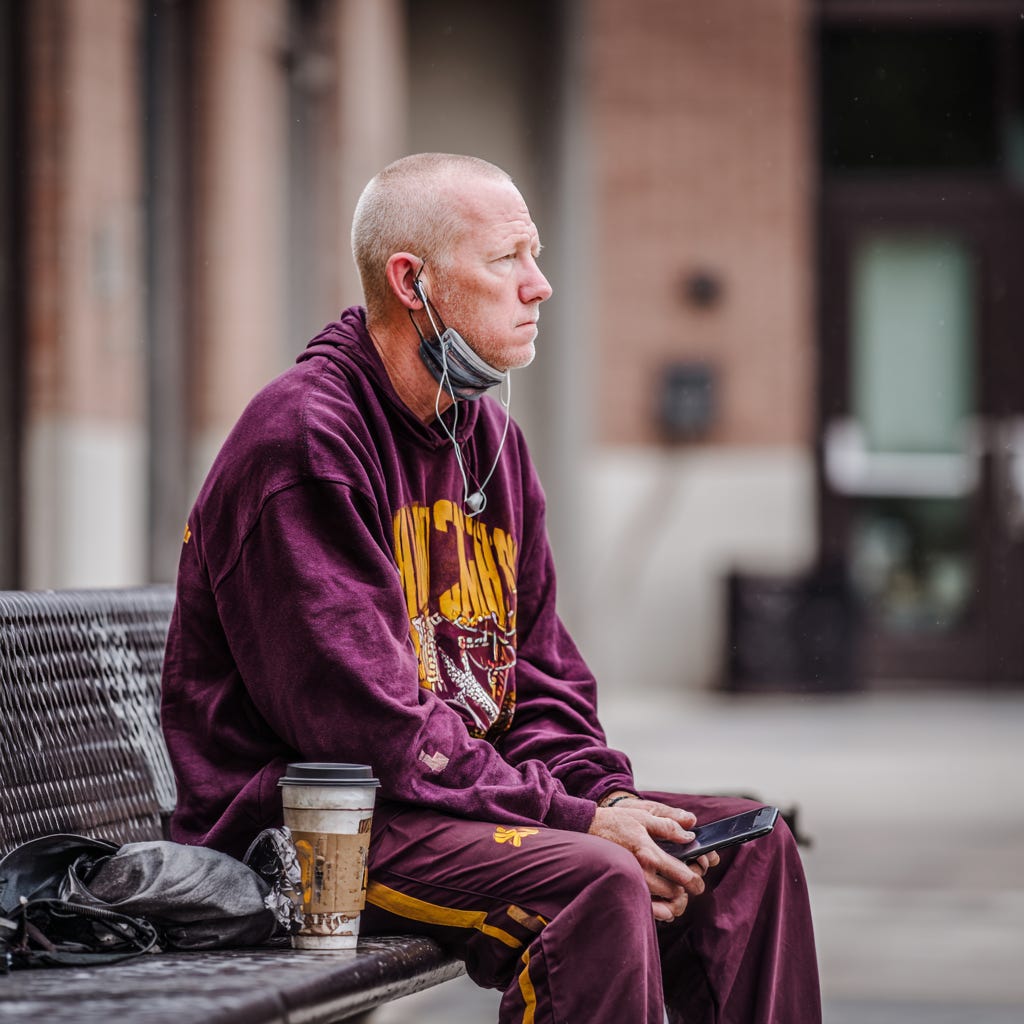
Jordan had slipped out of the University Medical Center as soon as he could. It wasn’t that he didn’t appreciate the efforts of the medical staff, but they wanted him to return to Mayo. More scans, more conversations, more options to be presented. A quick stop at the gift shop secured him an overly large maroon and gold sweatshirt with the University of Minnesota’s block ‘M’ emblazoned across the front. Another quick stop at the coffee cart secured him a chai latte of some kind, and then he was out the front door, slipping into the streams of people coming and coming from the hospital.
He didn’t really have a destination in mind. I need to walk, I need to think. Miss Scarlett had sent through the information she had promised late the night before, and immediately he understood why she had been so curious. The more Jordan sorted through what she sent, the more his curiosity deepened to suspicion. Something was going on. Someone was playing a game, and his eyes narrowed; they were using him to do it.
His head ached, and for a moment, the pain seemed like it was going to intensify again, and Jordan slowed his pace, forcing his breath into a slow, steady rhythm. He was still weaker than he wanted to be, the kind of weakness that went beyond exhaustion and seeped into your bones, but it wasn’t his body he needed to function; it was his mind.
That was the thing that really irritated him. He had been so focused on revenge, so focused on getting what he wanted, that he had missed the obvious signs. Needles was petrified about something. Killing General Casey… Jordan tried to think it through again, but shook his head. No use. It’s too much, I need somewhere to sit.
It was still early, not much after nine o’clock, and the mornings were still cool. The last of the snow had finally melted a couple of weeks prior, and spring seemed to be taking hold, but this was Minnesota. People were still somewhat wary this time of year, not wanting to believe that winter wasn't quite yet over, but Jordan knew better. The birds were chirping. Color was seeping back into the landscape, and there was just the faintest hint of warmth in the air.
Jordan looked around, trying to get his bearings, trying to remember the last time he had been here. He was on Delaware Street, passing the Department of Biochemistry, and he chuckled as he realized that, without meaning to, his feet were taking him towards the Student Union. “Talk about the persistence of memory,” he whispered to himself. He took his time, sipping his coffee and watching the campus slowly come to life as students, professors, employees, and administrators all walked to their respective destinations.
Soon enough, the Student Union came into sight.
Someday, someone would write the history of those tumultuous years when the American Republic had collapsed in on itself, and constitutional government, or a facsimile of it, limped along, quietly menacing at the margins. Raiding a house here, disappearing someone who talked too loudly and too publicly there. The kind of soft authoritarianism that Americans could carefully step around or ignore. None of it would have mattered at all, save for the quiet meeting that took place on the third floor of the Student Union about eight months before the Revolt began.
While cosplay communists and ridiculous rightists argued in the main ballroom about what piece of performance art masquerading as protest they would try next, the real meetings had been upstairs. Quiet conversations, decisions, plans. Jordan snorted in amusement as he turned the corner and caught sight of the front of the building. Of course, it hadn’t changed. He wasn’t sure why he thought it would after all this time. He made his way to an empty bench in front of the building and wrapped his hands tighter around his coffee mug.
They had all met there. Chelsea, Kevin, Steven, Melinda, and Jordan. There had been others, of course. That mousy-looking girl, Christine, who claimed to have contacts in the military. Geoff with a G, whose last name Jordan couldn’t remember, but seemed very Minnesotan. Names, faces, all crowded into Jordan’s mind. Some of them had fallen in the Revolt. Some had faded away, melted back into the population after the dust settled, and were probably living their lives the best they could, and some of them…
Jordan had never quite figured out how to shake the nightmares, even after all these years. Too many in his line of work turned to alcohol, drugs, or other vices to crowd out the noise and fight the guilt, but Jordan turned to face it. He remembered every face of every person he had ever killed. He remembered the names of the people he had turned over to Homeland Security, the networks he had dismantled, convinced beyond convincing that he was right and Chelsea was leading them to disaster or worse, outright defeat and-
The stabbing pain in his head returned, and he forced himself to take a deep breath. In slowly, inch by inch, through the nose, filling his lungs as far as they could go and then out through the mouth. He did that a few more times, and the pain faded a little each time until finally it eased.
Jordan reached into the pocket of the sweatshirt and pulled out the earpiece for his phone and the face shield that went along with it. He slipped the earpiece in and, grumbling to himself at how ridiculous the face shield was, slipped the loops over his ears and adjusted it over his mouth. He found a lot of the new anti-surveillance technology out in the world these days to be questionable at best, but he hadn’t lasted as long as he had without being cautious.
He unlocked his phone and dialed back the last number that had called him. It rang twice and-
“Yes?” Miss Scarlet said.
“I got the information you sent,” Jordan said. “I think you’re right. There is something odd here, but I can’t quite put my finger on it.”
“And?”
“Walk this out with me, will you?”
“It’ll cost-”
“Yes, yes,” Jordan said impatiently. “The usual rates apply. I get it, I get it.”
“My time is valuable, you know,”
“I know, but indulge me.”
“You have my indulgence.”
“You said that the Independence Party has tried to challenge the ban before, right?”
“Yes.”
“But it never goes anywhere?”
“Correct.”
“Why not?”
There was a long pause. “The usual reasons. Even before everything went to hell, they had an uphill battle on their hands. They could never get the funding to get ballot access or do candidate recruitment.”
“And with the ban in place for what, ten years now, they had an additional obstacle to overcome?”
“Obviously,” Miss Scarlet replied. “Where are you going with this?’
“They appear to have a full slate of candidates recruited,” Jordan said. “That’s why there are whispers. I have no idea how they’ve kept it this quiet, but they have. Appears they’ve had quiet meetings at various campuses around the state. Duluth, Bemidji, Moorhead, Rochester, Pipestone.”
“How, though? Someone has to be tracking that.”
“I got curious about the kid.”
“Which kid?”
“Hang on,” Jordan sighed. He dug into the pocket of the sweatshirt again and pulled out the glasses. “You’re gonna make me put on these ridiculous glasses.”
Miss Scarlet laughed. “You’re such a luddite.”
“They look ridiculous.”
“They’re getting better.”
Jordan blinked twice and activated the AR display. He blinked once to change the screen and then glanced down the list of files until he found what he was looking for. “Are you connected?”
“Hang on,” Miss Scarlet replied. “I am now.”
Another blink and he opened the image file he was looking for. “This kid.”
“Him?”
“Yeah, he seems to be their main recruiter. He’s in the Forensics society or Model UN or something that keeps him bouncing around the state, that’s how it’s flown under the radar, I think.”
“Huh,” Miss Scarlet replied. “Let me check to see if I can get more on him. Any connections to Homeland Security or any of the usual suspects?”
“That’s the thing: I can’t find anything. This kid, whoever he is, appears to be on the level.”
“Well, this is interesting. Check this out,” Miss Scarlet said. A new image appeared on his display. “I don’t know who these two young ladies are, but he’s met with them twice now. Really pushing to recruit the brunette, especially.”
Jordan slowly smiled as he looked at the image. The blonde he didn’t recognize at all, but the brunette, on the other hand, was very familiar indeed. Ghosts, everywhere I go, I’m haunted by ghosts of my past. “Can you find out who the brunette is?”
“I can try,” Miss Scarlet replied. There was a pause. “Why? Do you… recognize her or something?”
“Nope, just curious,” Jordan replied. Curious, but I would bet money I know what you’re going to find. “See if you can find information on her parents as well.”
“You figure they’re the money spigot?”
“It’s as good a guess as any,” Jordan replied. That wasn’t what he was guessing at all, but Miss Scarlet didn’t need to know that. “I’ve been back in the country for a couple of weeks now. Can you get me a rundown on any major Homeland Security activity, maybe three weeks ago?”
“This is turning out to be quite a profitable arrangement,” Miss Scarlet noted. “But yes, I can get you that information.”
“Good, I’ll be in touch,” Jordan replied and ended the call. He was about to slip the glasses from his face, but stopped for a moment to look at the image again as the screen turned yellow to indicate that Miss Scarlet had disconnected. The question of who was funding all of this was something he was going to have to dig into himself. Somebody was pulling the strings, and unless he was wrong, he squinted at the picture of the brunette again– and he didn’t think he was going to be, they had tracked down the granddaughter of the most famous Governor in Minnesota’s history to help their cause.
What the cause was and who was behind it all was something Jordan was very interested in finding out.
~
Keep writing!